Want more strategies like this?
Join our free newsletter to get weekly Band 9 frameworks delivered straight to your inbox.
Most students believe they cannot improve their spoken English without a native speaker sitting right in front of them. They think they need a tutor, a class, or a speaking partner to make any real progress. So they wait. They delay their practice sessions. And their score stagnates.
Here is the truth: when I took the official IELTS test and scored a Band 9 in IELTS Speaking — including a Band 9 in all four speaking criteria — I did the vast majority of my preparation alone, sitting at my home study desk. You do not need a partner. You need a system. Here is the exact three-step system I used.
First, Let’s Kill the Myth
Before we get into the steps, I want to challenge the belief that solo practice is somehow “lesser” than practicing with someone else.
Think of a professional swimmer. They do not spend all their training time racing against other swimmers. They spend hours alone in the pool, working on their breathing, their stroke technique, and their turns. The race is the performance. The solo training is where the skill is built.
Your IELTS Speaking test is that race. Your home practice is the gym — a zero-pressure zone where you can experiment, struggle, and build muscle memory for your mouth. The key is doing it correctly.
Step 1: The Simulation (Instant Reaction Method)
The first step is to simulate real test conditions from day one.
When you practice at home, do not give yourself endless time to prepare an answer. In a real English conversation — and in Parts 1 and 3 of the IELTS Speaking test — you do not get five minutes to write a script. You have to think and speak simultaneously.
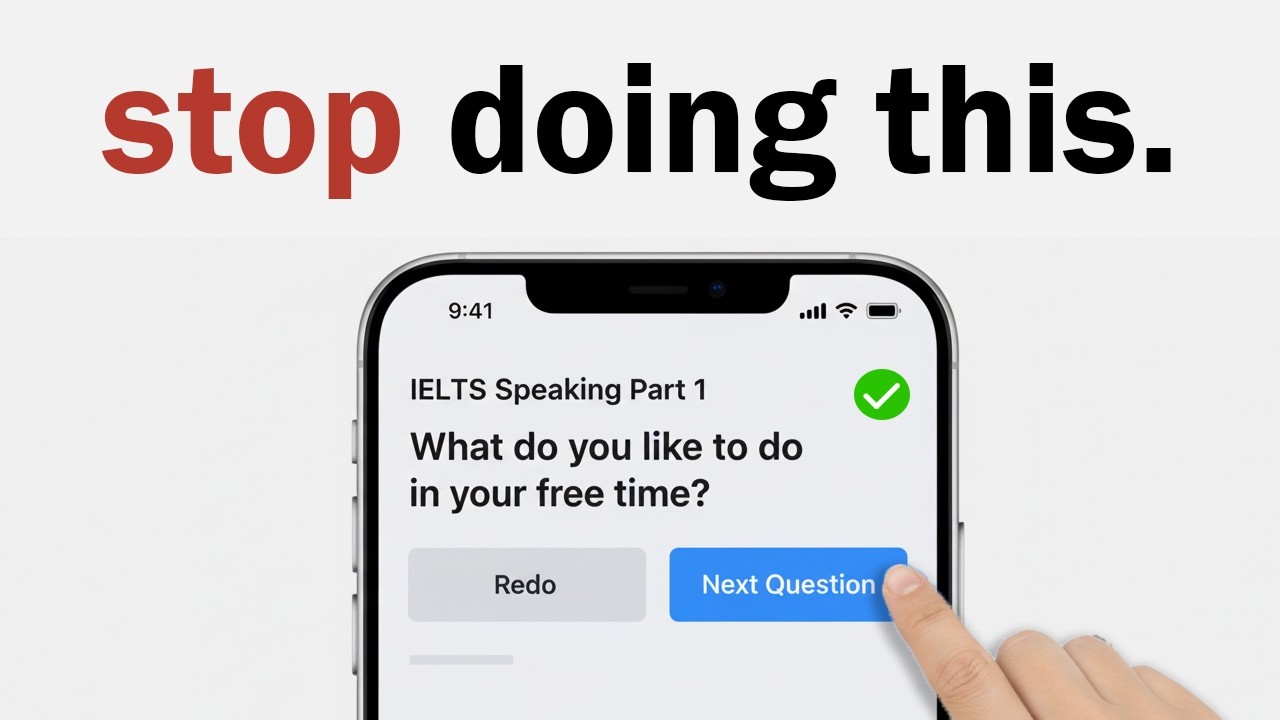
Here is the method: Find a list of IELTS Speaking questions, read one, and answer out loud immediately. Do not think about the answer in your head first. Do not write out bullet points. Just speak.
This forces your brain to build the neural pathways between having a thought and expressing it in English. It will feel uncomfortable at first, and you will stumble. That is completely normal. You are training your brain to react fast, and that fast reaction is the very core of Fluency.
Step 2: The Structure (Using Frameworks)
It is not enough to just talk. You need to talk with direction.
One of the biggest risks of practicing at home is that you start rambling. You talk in circles because there is no examiner to guide you. Without structure, you are not practicing — you are just reinforcing bad habits.
The solution is to use frameworks: mental structures that keep your answers organized. I created and used these frameworks myself when preparing for my own IELTS test.
For Part 1: The A.R.E. Framework™
Use this for the short-answer questions in Part 1. It keeps your answers tight at around 20 seconds:
- A — Answer the question directly
- R — Give a Reason
- E — Provide an Example
For instance, if asked “What’s your favorite food?”, a rambling answer loses points. An A.R.E. Framework™ answer looks like this:
“My favorite food is definitely sushi because it’s light, healthy, and I love the variety of fresh fish. For instance, I go to a Japanese restaurant every Friday to try different rolls.”
Clean. Structured. Coherent.
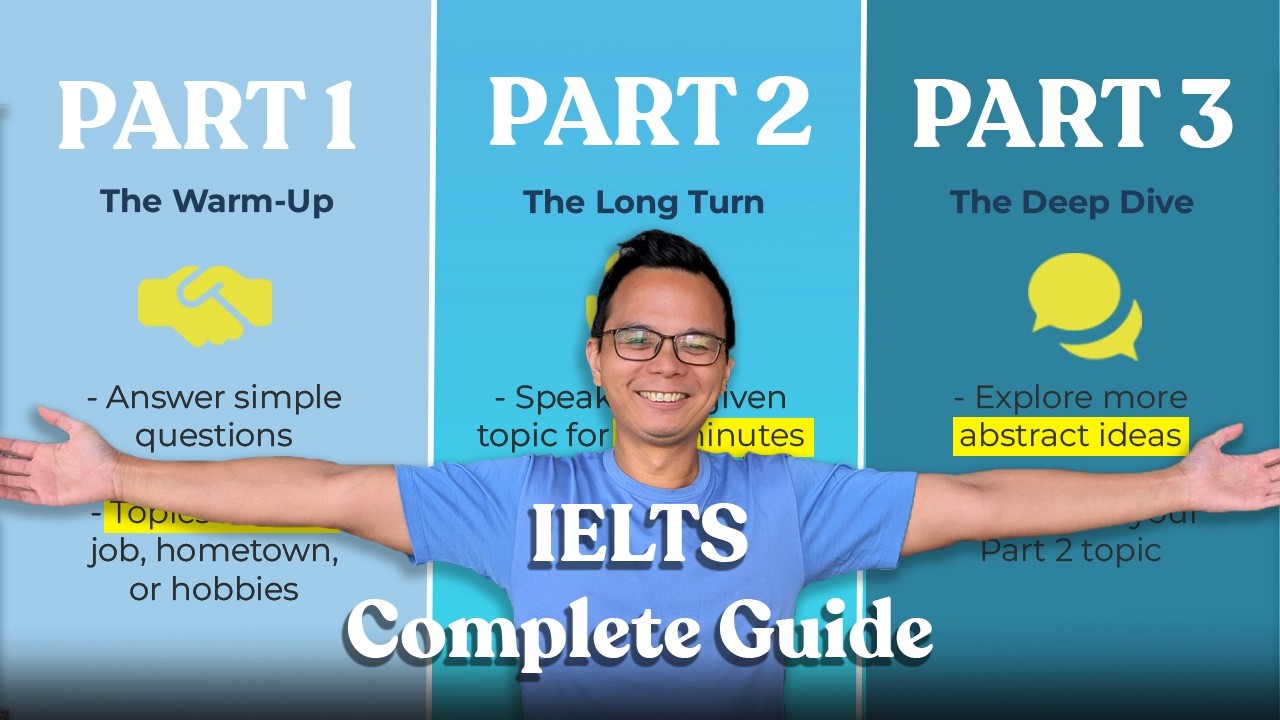
For Part 2: The Topic Diamond™
Part 2 requires you to speak for two full minutes about a single topic. Without a plan, most students either run out of things to say or repeat themselves.
The Topic Diamond™ gives you four angles to explore any topic:
- The Past — What was it like before?
- The Present — What is it like now?
- The Future — What might change or what do you hope for?
- Your Opinion — What do you personally think or feel about it?
By moving through these four angles, you never run out of content, and your answer builds genuine Coherence and Cohesion — one of the four official marking criteria.
For Part 3: The I.D.E.A. Framework™
Part 3 is where examiners test your ability to discuss abstract ideas and give opinions. The I.D.E.A. Framework™ keeps your argument well-developed:
- I — State your Idea
- D — Develop it with reasoning
- E — Give an Example
- A — Consider an Alternative viewpoint
This structure shows the examiner you can think critically and consider multiple perspectives — exactly what Band 8 and 9 answers do.
Step 3: The Feedback Loop (The Step Everyone Skips)
This is the most critical step, and almost every self-studying student skips it entirely.
If you just speak into the air, you have no idea whether you are making mistakes. You might be reinforcing incorrect grammar or poor pronunciation without even knowing it. You need objective data.
That means you must record yourself.
Use the voice recorder app on your phone, or for more detailed, IELTS-specific feedback, use the SpeakPrac app — I built it specifically for this purpose because I needed objective data for my own practice sessions.
How to Use Your Recordings
Once you have a recording, listen back to it. I know it can feel awkward hearing your own voice, but it is genuinely necessary. When you listen back, you become your own examiner. You will notice things you had no idea you were doing while speaking:
- Did you say “he go” instead of “he goes”?
- Did you hesitate for five full seconds trying to find a word?
- Did you actually answer the question that was asked?
Note down one or two specific things you want to fix. Then record your answer again. This is the loop:
Speak → Analyse → Improve → Repeat
I call this the SpeakPrac Cycle™. This is deliberate practice, and this is exactly how you go from a Band 6 answer to a Band 8 answer — entirely on your own.
Putting It All Together
Here is what a proper solo home practice session looks like using this system:
- Simulate — Pick a question and answer it immediately out loud, no preparation time.
- Structure — Use the correct framework (A.R.E. Framework™, Topic Diamond™, or I.D.E.A. Framework™) for the question type.
- Record and Review — Listen to your answer, identify one or two specific errors, and record it again.
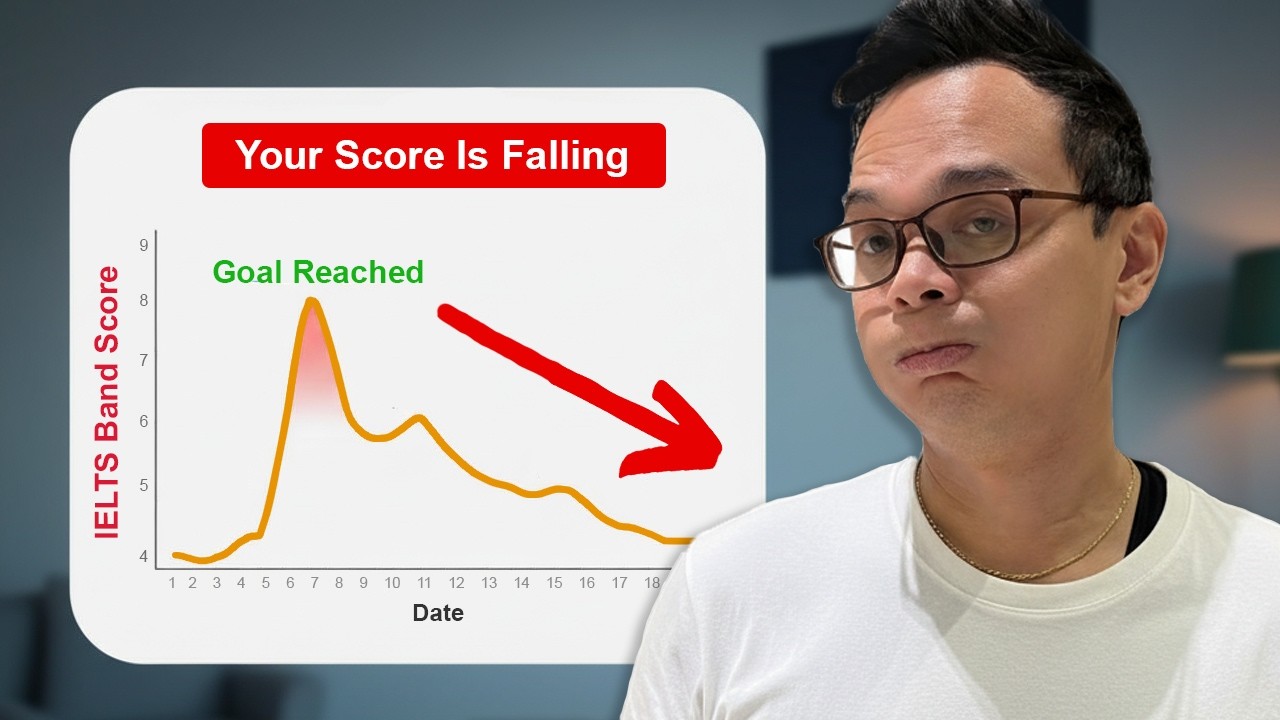
The biggest mistake students make is only doing Step 1. They practice questions endlessly but never analyse their output, so they repeat the same errors and wonder why their score never improves. The feedback loop is what separates students who plateau from students who progress.
You have everything you need to make real, measurable progress from home. Now it is just a matter of doing it correctly.
Ready to take your speaking to the next level?
Apply today's tips in the SpeakPrac app and get instant AI feedback on all 4 IELTS criteria. Or master the fundamentals with my complete, free video course.