Want more strategies like this?
Join our free newsletter to get weekly Band 9 frameworks delivered straight to your inbox.
You practiced. You recorded yourself. You even got feedback. So why is your IELTS Speaking score still sitting at Band 6 or 6.5?
The answer is almost never about how much you speak—it’s about one silent, repeatable error that the examiner notices immediately: tense inconsistency on routine questions. It looks minor. It feels minor. But in the official marking criteria, it signals a fundamental lack of grammatical control that prevents you from crossing into Band 7 and above.
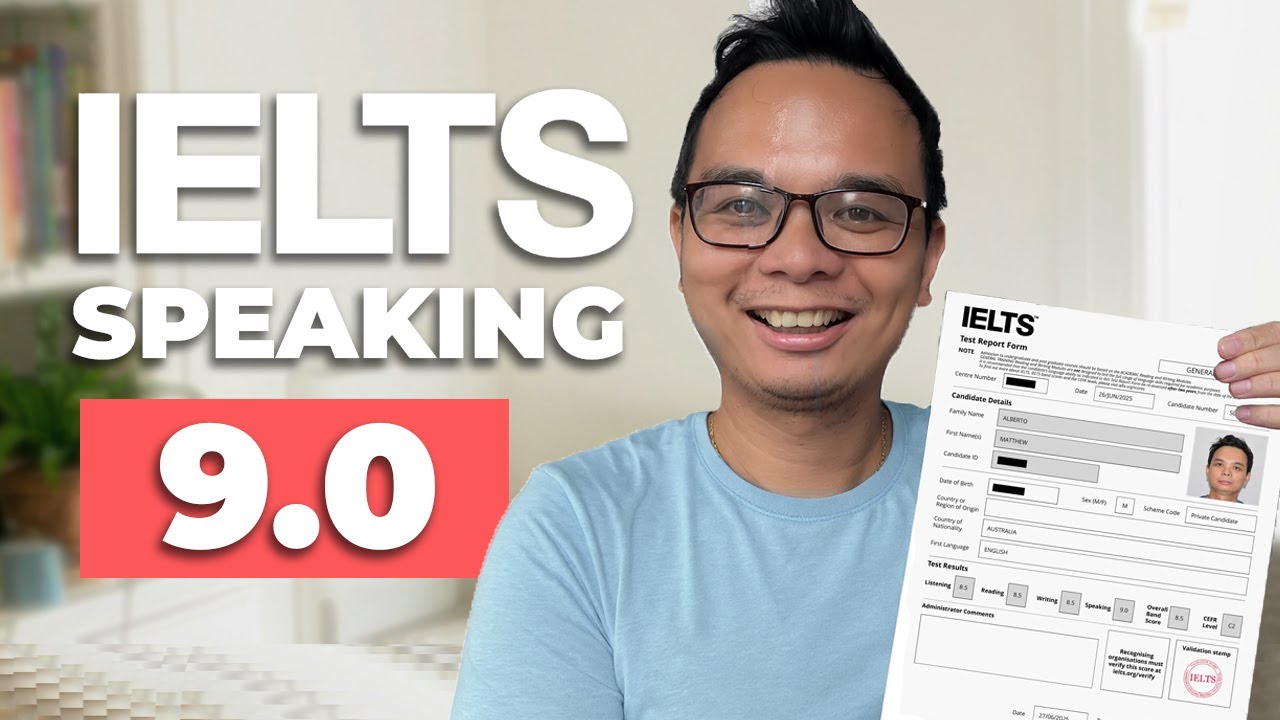
I’m Matt. I scored a Band 9 in IELTS Speaking—a Band 9 across all four criteria. In this guide, I’m going to walk through a real practice response from Caroline, a student using the SpeakPrac app, and show you the exact errors that pinned her score at Band 6.5—and the precise fixes that will push you higher.
The Real Response: Caroline’s Band 6.5 Answer
Caroline is from Kenya. Her target is Band 9. She answered this IELTS Speaking Part 1 question:
“How long does it take you to get ready in the morning?”
Here is what she said:
“It takes me about four to five minutes to wake up in the morning to get ready in the morning because first I have just opened my eyes, stare at things and sometimes stare at my phone. I know is not recommended not healthy at all.”
On the surface, this sounds like a reasonable answer. She’s communicating. She’s fluent enough. So what’s the problem?
Let’s break it down using the four official IELTS Speaking marking criteria.
Criterion 1: Fluency & Coherence
Looking at Caroline’s metrics from the SpeakPrac app, her speaking rate is 139 words per minute and her average pause duration is about one second. That’s a genuinely good natural pace—it signals she’s comfortable speaking.
However, there’s a self-correction at the start. She realises mid-sentence that she’s used the wrong phrase and corrects herself. For Band 6 or Band 7, that’s acceptable. But Band 9 requires effortless flow—no backtracking, no mid-sentence repairs. That self-correction, however brief, tells the examiner that something isn’t fully automatic yet.
Criterion 2: Lexical Resource (Vocabulary)
This is where a subtle but important confusion emerges. Caroline conflates waking up and getting ready—two completely different actions.
- Waking up = opening your eyes, coming out of sleep
- Getting ready = showering, dressing, brushing your teeth—preparing for the day
She says it takes her four to five minutes to “get ready,” but then describes staring at her phone. This creates logical confusion for the listener. A Band 9 speaker uses vocabulary with full precision—the words they choose mean exactly what they intend.
Criterion 3: Pronunciation
Caroline’s delivery is clear enough to understand, and she gets her message across. But the endings of her words—particularly past tense endings—are difficult to distinguish. It’s unclear whether she’s saying opened or open, stared or stare.
This matters because it creates ambiguity: is it a pronunciation problem, or a grammar problem? Either way, the examiner can’t give the benefit of the doubt. Crisp, audible word endings—especially on past tense markers—are essential at the higher bands.
Criterion 4: Grammatical Range & Accuracy — The Critical Error
This is where Caroline’s score is genuinely capped, and it’s the most important lesson in this guide.
The question is about a daily habit:
“How long does it take you to get ready?”
That present simple framing—does it take—is the examiner’s signal. They want to hear about your routine. Your answer should be anchored in the present simple tense.
But listen to what Caroline says:
“…because first I have just opened my eyes…”
She switches to the present perfect tense. That tense signals a single action that just happened—something recent and specific. It contradicts the question entirely, which is asking about a general, repeated habit.
The correct phrasing is simply:
“…because first I open my eyes…”
Why This One Error Caps the Score
Band 7 and Band 8+ require frequent error-free sentences. When you make a mistake on a fundamental tense—the present simple for routines—it signals to the examiner that you don’t have reliable control over basic grammar structures. Even if your vocabulary is excellent, the grammar criterion score gets pulled down to the Band 6 range.
The fix is simple: when talking about routines in Part 1, lock your grammar into the present simple. Don’t overcomplicate it.
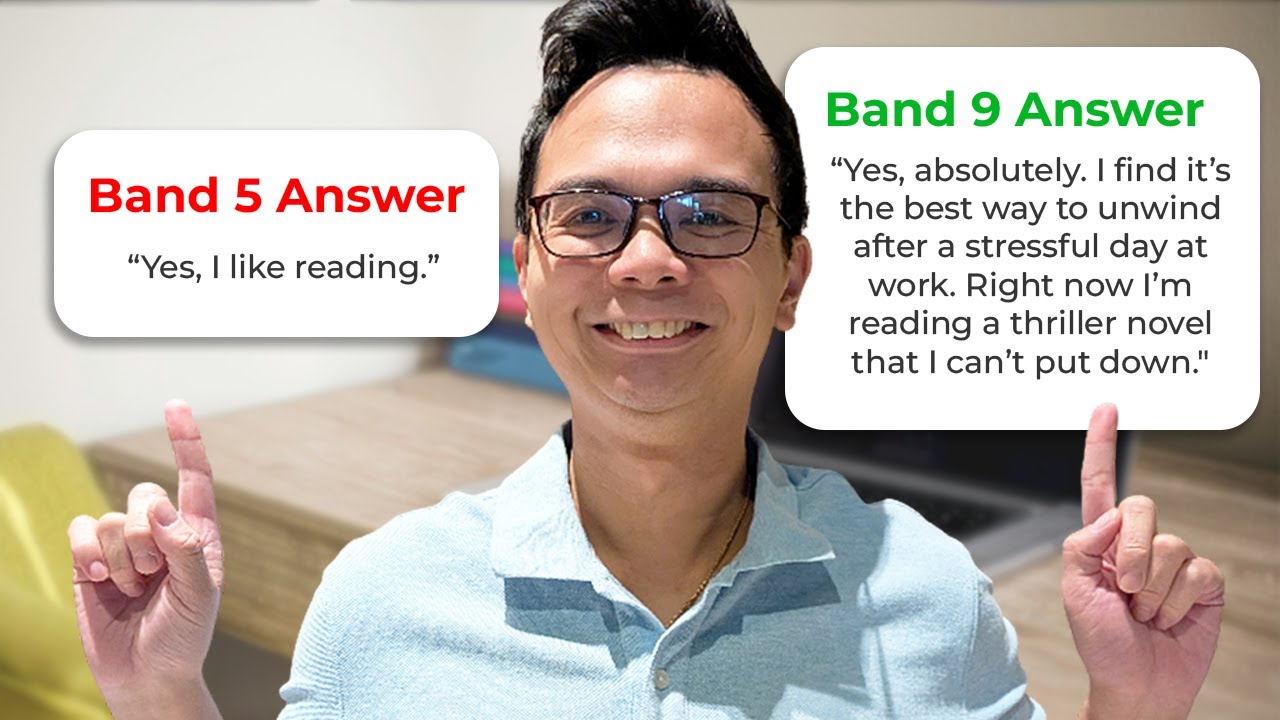
What a Band 9 Answer Sounds Like
Using the A.R.E. Framework™ (Answer → Reason → Example), here’s how I’d approach the same question:
“Honestly, getting ready is a bit of a process for me, so it takes about an hour. I’m not a morning person, so I move slowly until I’ve had my coffee. For example, I spend about 15 minutes just staring at the ceiling trying to wake up before I even think about showering or getting dressed.”
Notice what this does differently:
- Precision — I clearly distinguish between waking up and getting ready
- Grammar — Present simple throughout: I move, I spend, I think
- Coherence — The answer flows from a time (an hour) → a reason (not a morning person) → a specific example (15 minutes staring at the ceiling)
Key Takeaways
If you’re in the same position as Caroline—strong communicator, but stuck below Band 7—focus on these two things first:
1. Tense consistency for Part 1 routines Part 1 questions about habits and daily life require the present simple. Not the present perfect. Not the past simple. When you hear “How long does it take…” or “Do you usually…”, that’s your cue. Lock in the present simple and keep it consistent throughout your answer.
2. Vocabulary precision Make sure the words you use actually mean what you intend. Before your exam, practice distinguishing common word pairs that learners confuse: wake up vs get up vs get ready, study vs learn, say vs tell. Precision is the difference between Lexical Resource at Band 6 and Band 8.
Practice This Yourself
Caroline used the SpeakPrac app to record her response and receive an instant estimated band score with AI feedback. You can practice the exact same type of Part 1 question she answered, hear where your tense usage slips, and track your improvement over time.
One final reminder: language assessment has an element of subjectivity, and no AI tool—including the SpeakPrac app—is perfect. These analyses are for learning purposes. The goal is always progress, not perfection.
Ready to take your speaking to the next level?
Apply today's tips in the SpeakPrac app and get instant AI feedback on all 4 IELTS criteria. Or master the fundamentals with my complete, free video course.