Want more strategies like this?
Join our free newsletter to get weekly Band 9 frameworks delivered straight to your inbox.
Your heart is pounding. The examiner looks up from their clipboard and asks: “What is your full name?”
It sounds almost insultingly simple. But this is the moment most students unknowingly sabotage their entire exam. They over-explain, they spell their name without being asked, and they arrive at Part 1 already feeling stiff and rattled. Your first answer sets the psychological tone for everything that follows. Get it wrong and you carry that tension into the questions that actually count.
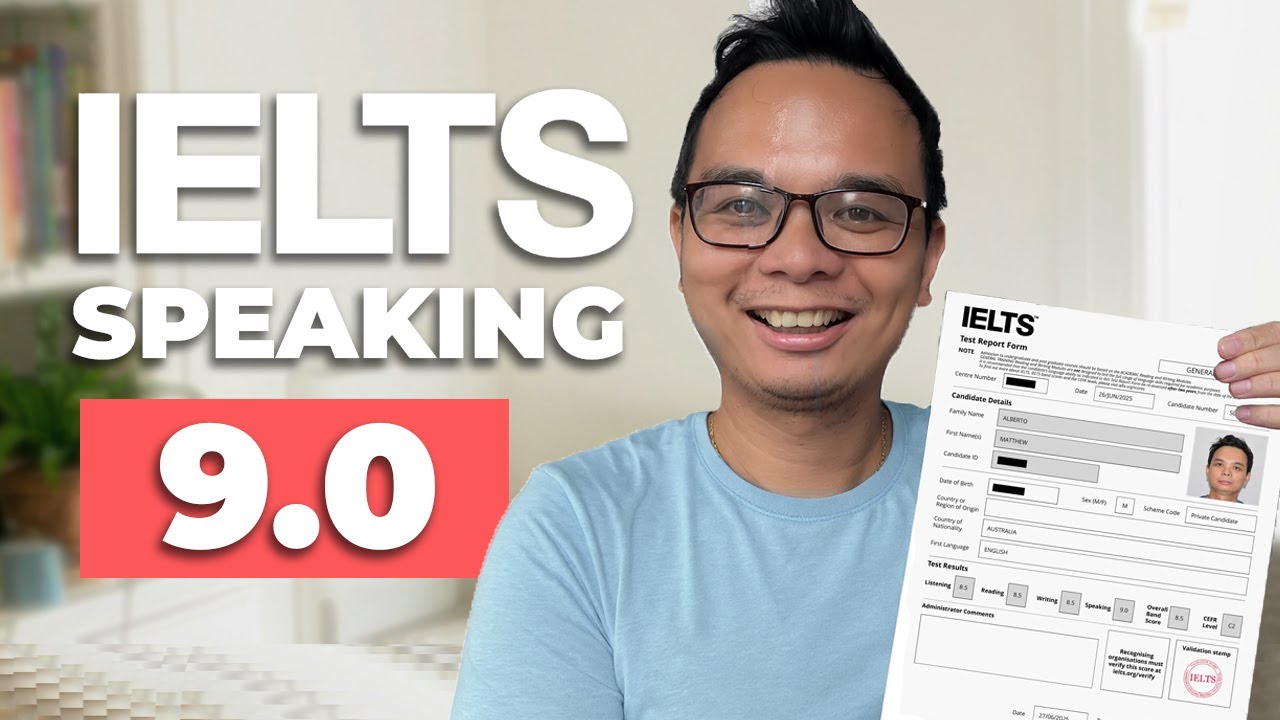
I’m Matt, a verified Band 9 speaker — I sat the real test and I have the certificate to prove it. In this guide, I’ll show you exactly how to handle the opening introduction questions so you feel grounded, natural, and ready to perform at your peak from the very first word.
Understanding “Part Zero”: Why It Matters Even Though It Isn’t Scored
The opening exchange — where the examiner asks for your name and checks your ID — is sometimes called Part Zero. It is technically not scored, but that does not mean you should treat it casually.
Think of it like a warm-up lap. The examiner is a human being. The impression you create in these first 30 seconds shapes how they subconsciously perceive your fluency for the rest of the test. If you sound robotic or nervous here, you may feel stiff for the entire exam. If you sound calm and natural, you step into Part 1 with momentum and confidence.
The #1 Mistake Students Make When Asked Their Name
When the examiner asks “What is your full name?”, students tend to do one or more of the following:
- Explain who gave them their name (“My mother named me after my grandfather…“)
- Explain the meaning of their name (“In my language, it means strength…“)
- Start spelling their name without being asked
All of these responses are mistakes. This is not a storytelling moment. The examiner is simply verifying your identity and settling you in. They do not need a biography.
The Band 9 Approach: One Clean Sentence
Keep it short, precise, and natural.
“My full name is Matthew Alberto.”
That is it. Nothing more. If your name is difficult for a native English speaker to pronounce, say it slowly and clearly — but you still do not need to explain it or apologize for it.
Handling the Follow-Up: “What Can I Call You?”
After you give your full name, the examiner may follow up with “What can I call you?” or “Do you have a preferred name?”
This is your chance to offer a shorter or more familiar version of your name. Keep the same calm, natural tone:
- “You can call me Matt.”
- “Please call me Matt.”
Notice what I am not doing here. I am not rushing. I am not loud. I am not performing. I am simply speaking the way a confident, fluent person speaks — at a measured pace with a natural tone.
After the Name: What Comes Next
Once you have given your name and the examiner has checked your identification, the actual scored portion of the test begins immediately. The examiner will move you into Part 1, where you are likely to be asked about one of these three topics:
- Your work or studies
- Your hometown
- A familiar daily-life topic
This transition happens quickly, so it is critical that you are already mentally settled and warmed up before it arrives. Treating Part Zero as a genuine opportunity to find your rhythm — rather than a throwaway formality — is exactly what gives you that edge.
Practice the Simple Stuff First
One trap I see students fall into is jumping straight to complex Part 2 cue cards and Part 3 abstract questions without ever practicing the basics. If you stumble over your own name, your confidence collapses before the test has even started.
I built the SpeakPrac app to prepare for my own IELTS Speaking test. You can use it to record yourself answering introductory questions just like this one — hearing your own voice back is one of the most powerful ways to catch unnecessary nerves, unnatural pacing, or filler words you didn’t realize you were using.
Start simple. Build confidence from the ground up. Then work your way to the tougher questions in Parts 1, 2, and 3.
The Bottom Line
“What is your full name?” is not a trick question. But it is a test of composure.
The Band 9 answer is not the most elaborate answer. It is the most natural answer — calm, precise, and delivered with quiet confidence. One sentence. No spelling. No backstory. No rush.
Nail this, and you walk into the scored portion of the exam already feeling like yourself.
Ready to take your speaking to the next level?
Apply today's tips in the SpeakPrac app and get instant AI feedback on all 4 IELTS criteria. Or master the fundamentals with my complete, free video course.