Want more strategies like this?
Join our free newsletter to get weekly Band 9 frameworks delivered straight to your inbox.
A student recently told me she needed more time to prepare her answers. She felt rushed, pressured, and convinced that extra thinking time would make her sound more intelligent in IELTS Speaking Part 1.
But here is the brutal truth: that desire for more preparation time was the very thing destroying her score.
I scored a Band 9 in IELTS Speaking — including a Band 9 across all four criteria — and in this guide I’ll show you exactly why your brain freezes during Part 1, why preparing is actually your biggest enemy, and how to switch from planning mode to reaction mode.
The Shocking Data Behind Low Fluency
When I analysed her speaking metrics, the numbers told a clear story.
She was speaking at just 66 words per minute. Natural conversation runs at around 120 to 150 words per minute. She was speaking at half the natural speed.
Why? Her average pause duration was close to three seconds. After every single sentence, she stopped, waited, and searched for the next perfect idea.
She wasn’t speaking. She was writing an essay in her mind.
The Preparation Trap Explained
This is what I call the preparation trap, and it is one of the most common reasons Part 1 scores stay low.
There is something critical to understand about IELTS Speaking Part 1: it is not an intelligence test. It is not a knowledge test. It is not a test of complex ideas. It is a communication test.
What Part 1 Is Actually Testing
In Part 1, the examiner fires rapid questions about you:
- What’s your favourite colour?
- Do you like chocolate?
- Do you work or are you a student?
These are warm-up questions. They are specifically designed to be answered instantly.
In real life, if someone asks, “Do you like chocolate?”, you don’t pause for three seconds and construct a complex response. You react:
“Yes, I love it — especially dark chocolate because it’s not too sweet. In fact, I eat a small piece every night for dessert.”
That reaction was instant. It was natural. It was fluent. And it would score highly.
How Overthinking Kills Your Score
The overthinker hears “Do you like chocolate?” and their brain immediately hijacks the process:
“Hmm, I need a complex sentence. I need a connector. Oh, and I should mention the health benefits too…”
While the brain is processing, the silence grows. Fluency drops. The examiner disengages.
This is why chasing the “perfect” answer is dangerous. In Part 1, fluency is about reaction, not preparation.
You must trust your first thought and then expand on it. Even if it is simple, say it — and then build on it. The examiner does not care if your favourite colour is blue. They care that you can say blue without translating in your head and without a five-second pause before your first word.
How I Trained My Band 9 Reflex
When I prepared for my own Band 9, I trained specifically for this reflex. I didn’t script my answers. I didn’t memorise long vocabulary lists.
I measured my reaction time.
Using the SpeakPrac app, I forced myself to speak the moment a question appeared. If my pauses were too long, I could see it immediately in the data. That meant I was overthinking — so I practised speaking even before I felt ready.
Why Data Changes Everything
Seeing your hesitation as data is extremely powerful. It removes excuses. It removes emotion. You can clearly identify exactly where your fluency breaks down — and then fix it.
The Simple Fix: React, Then Expand
Here is what I believe: anyone can speak English, but for IELTS Speaking Part 1, you need to stop trying to sound like a philosopher. Just be a person having a chat.
Use this simple pattern every time:
- Answer the question directly.
- Give a reason.
- Give an example.
That is it.
The A.R.E. Framework™
If you want a reliable structure that prevents overthinking, I strongly recommend the A.R.E. Framework™:
- A — Answer
- R — Reason
- E — Example
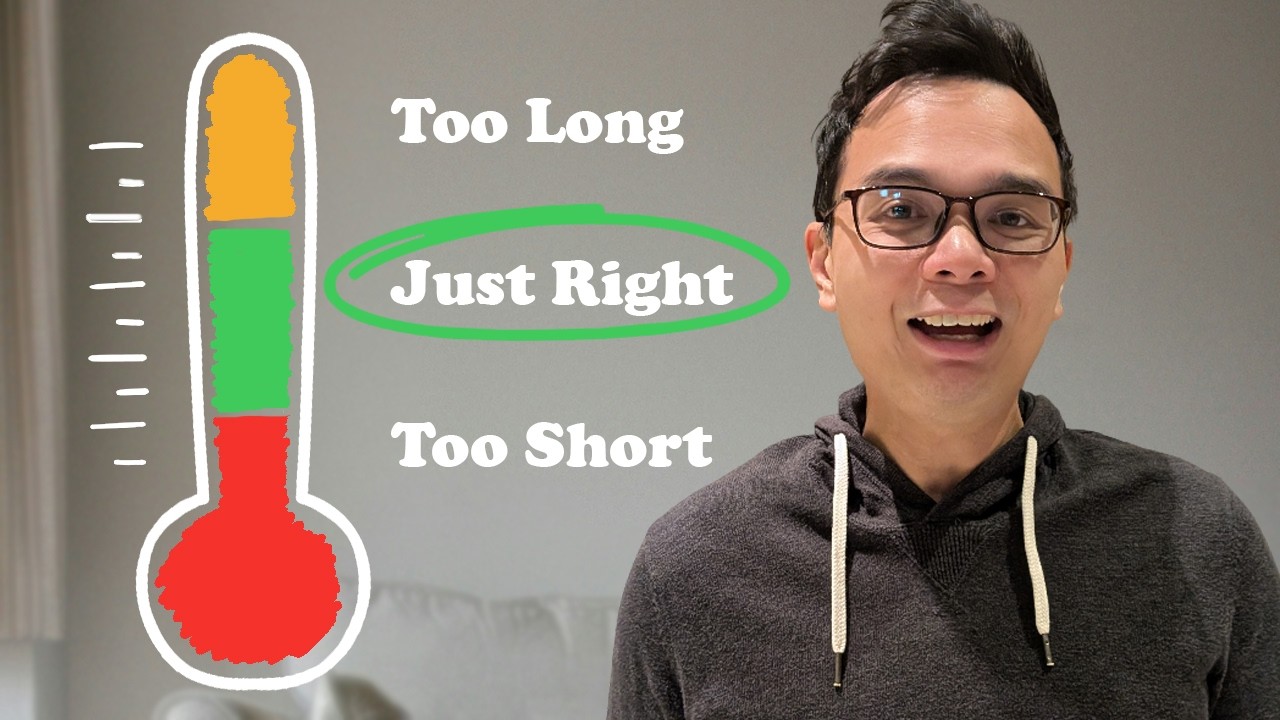
This framework keeps you safe, keeps you fluent, and ensures your answer lands in the 20-second Goldilocks zone — not too short, not too long, just right.
The One Catch: Speed Without Connection Is Just Noise
Fast answers can still lose points if your ideas don’t connect smoothly. Coherence matters.
Reaction speed improves your Fluency score immediately. But you also need your ideas to flow together clearly — that is what separates a Band 7 from a Band 8 or 9.
The Bottom Line
If you feel that 20 seconds is too short, you are not underprepared.
You are overthinking.
Trade preparation for reaction, and your fluency score will change immediately. Trust your first thought, expand with a reason and an example, and stay in that 20-second sweet spot. The examiner is not waiting for a masterpiece — they are waiting for a conversation.
Ready to take your speaking to the next level?
Apply today's tips in the SpeakPrac app and get instant AI feedback on all 4 IELTS criteria. Or master the fundamentals with my complete, free video course.