Want more strategies like this?
Join our free newsletter to get weekly Band 9 frameworks delivered straight to your inbox.
You answered the question. You gave a reason. And then you stopped.
It feels like the right thing to do — you answered honestly, you didn’t ramble, and you kept it clean. But here is the hard truth: that approach will cap your IELTS Speaking score at Band 5.5, no matter how accurate your grammar is or how clear your pronunciation is. The examiner is waiting for you to develop your ideas, and if you don’t, the Band 8 you are aiming for will stay just out of reach.
The good news is that this is one of the most fixable problems in IELTS Speaking — and it comes down to a single missing step in your answer structure.
A Real Example: Eman’s Band 5.5 Plateau
Let me show you this problem in action. This is Eman from Pakistan. Her target is Band 8, but she has been stuck at Band 5.5. The Part 1 question was:
Do you prefer to cook alone or with others?
Her response answered the question and included a brief reason. But then it stopped — and the final thought felt unfinished, as if the sentence had been translated directly from her native language rather than completed naturally in English.
Let’s break down exactly what the IELTS marking criteria say about her response.
Vocabulary (Lexical Resource)
Eman’s word choices communicated her meaning clearly, but they were quite basic — words like love, cooking, and mess. These are perfectly fine words, but they do not demonstrate any range of vocabulary to the examiner. At Band 5–6, you get your message across. At Band 8, you show you have a wider, more precise toolkit.
Grammar
Her grammar held up for simple sentences, but it broke down at the end. The closing thought sounded incomplete — the kind of phrasing that suggests she was mentally translating from her first language rather than thinking in English. A simple fix would be replacing it with a natural phrase like nobody is going to judge me or nobody is going to question me.
Pronunciation
The individual sounds Eman produced were not the issue. The real problem was speed. She was speaking at around 106 words per minute. For context, native English speakers typically speak at 120–150 words per minute.
Speaking too slowly actually hurts your Pronunciation score because there is too much space between your words. Features like connected speech and natural rhythm only emerge when your pace is close to natural. Slow speech makes it harder — not easier — for the examiner to hear those features.
Fluency & Coherence: The Real Culprit
This is where Eman’s score is being held back most. The Band 9 descriptor requires speakers to develop topics fully and appropriately. The Band 5 descriptor, by contrast, describes speakers who produce simple speech fluently but struggle when communication becomes more complex.
Eman gave a direct answer. She gave a reason. Then she stopped.
That structure is enough for Band 5.5. It is not enough for Band 8.
The Fix: The Missing Step in the A.R.E. Framework™
For IELTS Speaking Part 1, I teach the A.R.E. Framework™:
- A — Answer the question directly
- R — Give a reason
- E — Give an example or explanation
Eman completed the A and the R. She completely skipped the E.
That third step is not optional if you are aiming for Band 8 or above. It is the difference between a complete answer and a truncated one. All Eman needed was one more sentence — something that explained why making a mess matters, or what kind of mess she actually makes when she cooks.
That single addition would have transformed her answer from a Band 5.5 response into something the examiner could reward at a much higher level.
A Band 9 Model Answer Using the Same Ideas
Here is how I would answer the same question, using the same core ideas Eman had:
“Honestly, I much prefer cooking alone. It’s a chance for me to switch off and to experiment without anyone looking over my shoulder. Plus, I can get very messy when I cook and I’d rather not have an audience for that.”
Notice a few things:
- I used the phrasal verb switch off (natural, high-level vocabulary)
- I used the idiom looking over my shoulder (demonstrates Lexical Resource)
- The final thought is complete — it explains the why, not just the what
- The answer flows naturally from one idea to the next, which is exactly what Fluency and Coherence rewards
The ideas are not dramatically different from Eman’s. The structure is.
Your Three Key Takeaways
If you want to fix this in your own practice, here is what to focus on:
Never leave a thought incomplete. Every sentence should land cleanly. If you feel yourself trailing off, push through to finish the idea before stopping.
Always include the E in the A.R.E. Framework™. The Answer and the Reason are the foundation, but the Example or Explanation is what pushes you into Band 8 territory.
Give a deeper explanation. Don’t just say why you prefer something — say what that looks like in practice, or what it means for you personally. That development is what separates a Band 5.5 answer from a Band 8 answer.
How to Practice This
Eman used the SpeakPrac app to practice this exact question. She recorded her answer, received instant AI feedback, and got an estimated band score — all without needing a tutor.
I built the app when I was preparing for my own IELTS test, because I needed a way to practice my frameworks repeatedly and get honest feedback on where my answers were falling short. If you want to test whether you make the same mistake as Eman, you can answer the exact same question she did inside the app.
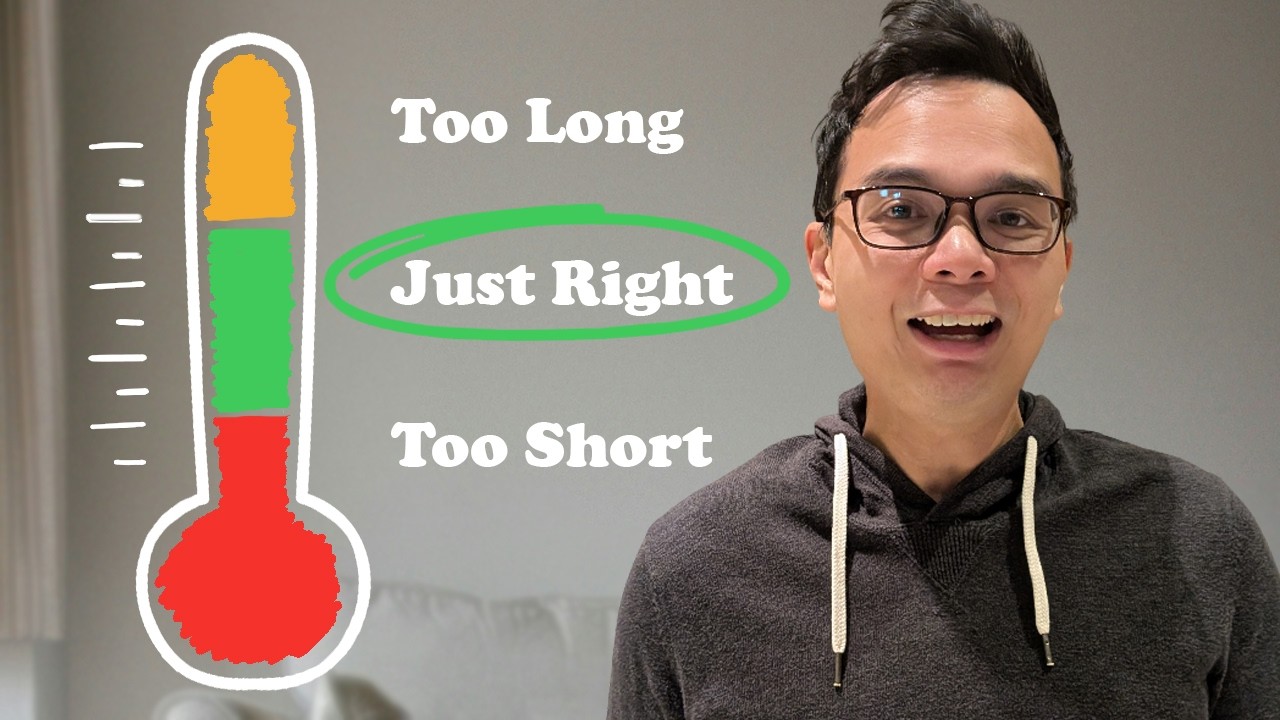
Keep in mind that Part 1 is not just about giving short, conversational answers. There is a Goldilocks zone — not too short, not too long — and hitting that zone consistently is a skill worth developing. Your answers need enough development to show the examiner your range, but they should not spiral into a two-minute monologue on a simple topic. The A.R.E. Framework™ is designed to keep you right in that zone, every time.
Ready to take your speaking to the next level?
Apply today's tips in the SpeakPrac app and get instant AI feedback on all 4 IELTS criteria. Or master the fundamentals with my complete, free video course.